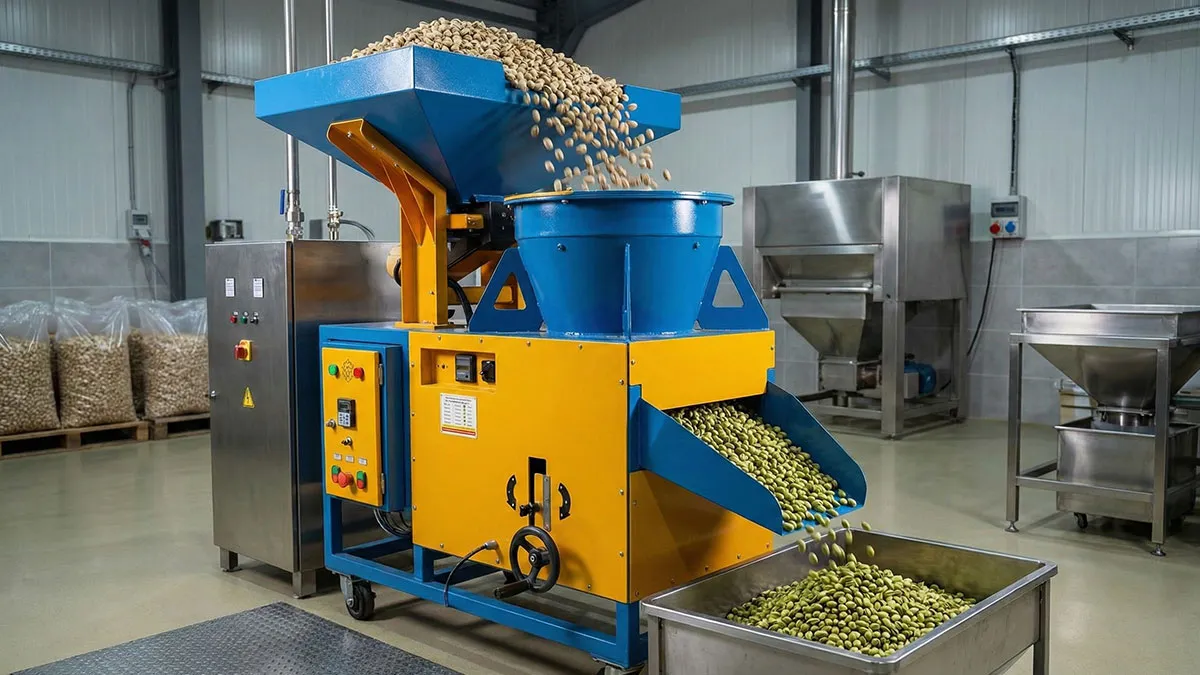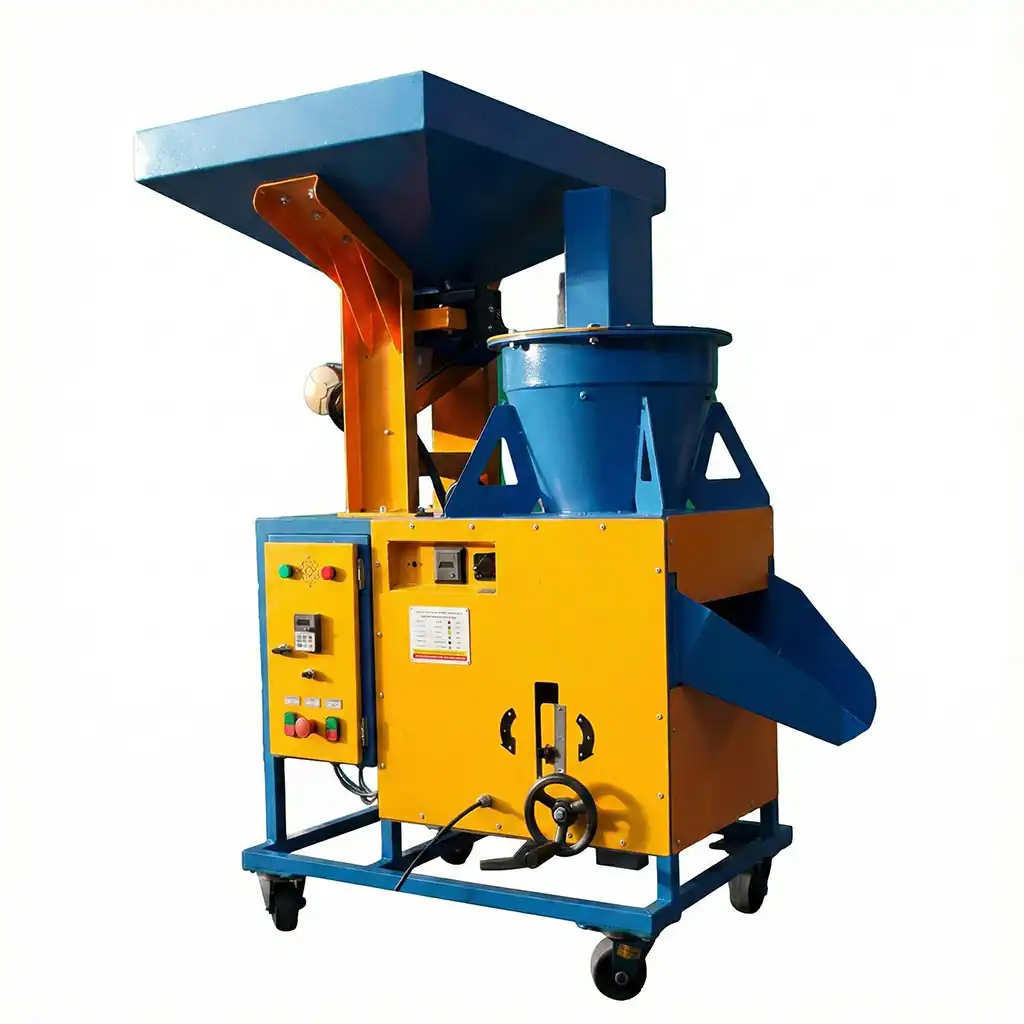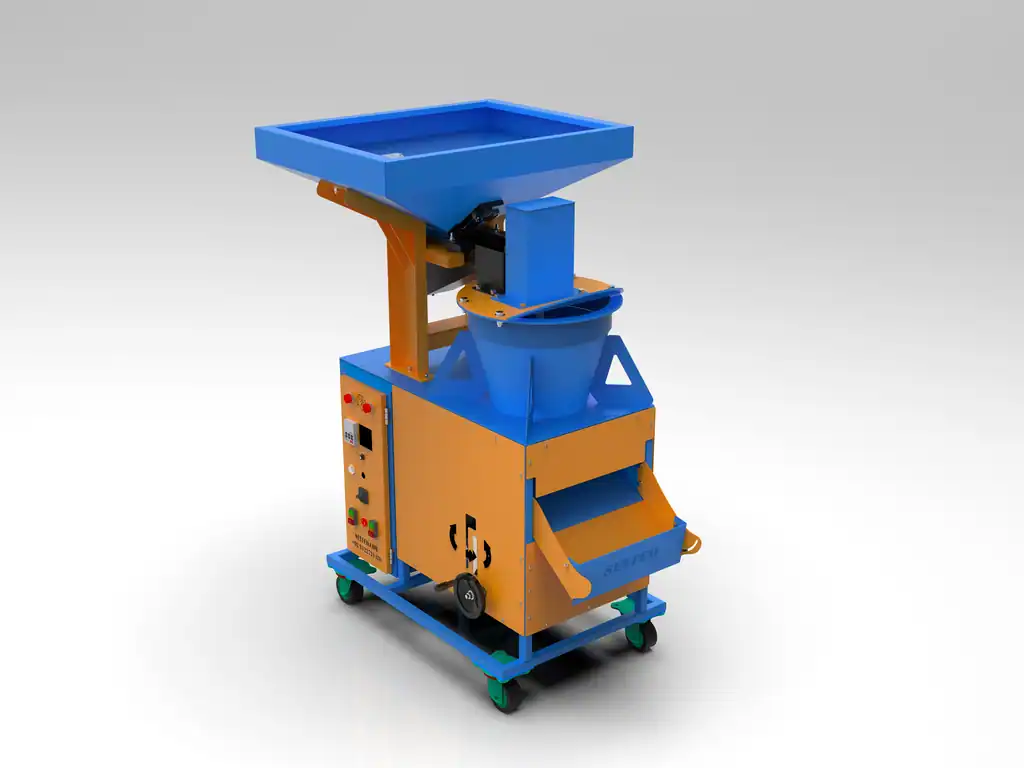

Many producers are well aware that even with the best walnut cracker on hand, without a precise separation system, the final output would be nothing more than a mixture of kernels, shell fragments, and waste. This is where the role of a walnut shell separator becomes clear. A machine that, using a combination of controlled vibration, engineered airflow, and intelligent screening, separates healthy, saleable kernels from all types of shells, fines, and debris. The result is a higher-quality product, a faster production line, and a significant reduction in waste.
If you are looking to increase the efficiency, quality, and profitability of your line, having a precise understanding of this machine and choosing it correctly is the first step toward professionalizing your business. In this guide from the Seifi website, we will examine the various types of walnut shell separators and their prices.
What is a walnut shell separator?
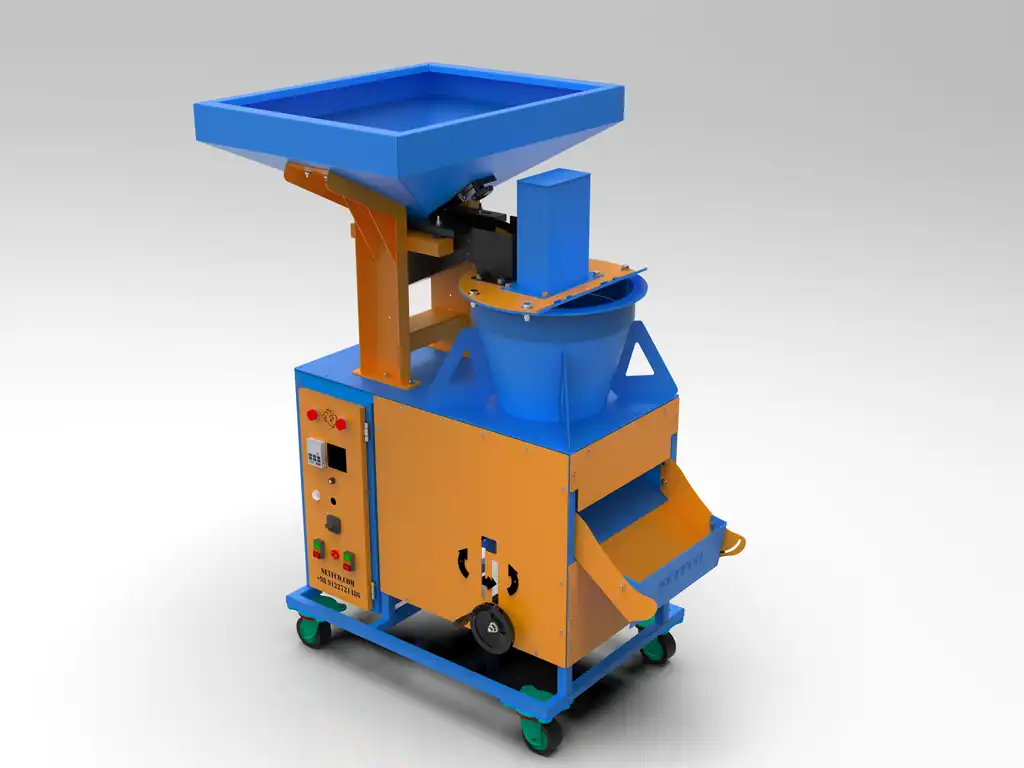
A walnut shell separator is a machine that, after the industrial walnut cracker, is responsible for separating walnut kernels from hard shells, debris, and wood pieces. At this stage, the output from the walnut cracker includes whole kernels, half or fragmented kernels, hard shell pieces, and dust from the cracking process. If this mixture goes into subsequent stages without precise separation, the following problems arise:
- Decline in final product quality
- Damage to downstream equipment in the production line, such as the walnut aspirator and walnut sorting machine.
- Customer dissatisfaction due to the presence of shell fragments in the packaging.
This is precisely why the walnut shell separator, as a specialized piece of equipment, plays a crucial role in the walnut processing production line. This machine, using a combination of vibration, weight separation, airflow, and multi-layer screening, separates the kernels from shells and waste, so you end up with a clean, marketable output.
The importance of separating the hard walnut shell in industrial processing
The goal of the walnut processing production line is to increase the economic value of the product, which depends on the purity, cleanliness, uniformity, and integrity of the kernels. The lower the percentage of shells and waste in the final product, the higher the selling price, especially if the target is export or sales to food processing factories. The importance of this stage can be explained in several key areas:

Increasing the added value per kilogram of walnut kernels
If even 5 to 10 percent of shells remain in each kilogram of the final product, the customer will consider the product low-quality, and in bulk purchases, they may ask for a discount or return the shipment. You will also lose access to high-quality markets such as restaurants, pastry factories, and export opportunities. The walnut shell separator ensures that you deliver walnut kernels with high purity, maximizing revenue from every kilogram of product.
Preventing damage to downstream equipment in the line
When shell fragments enter the walnut sorting machine, conveyors, bucket elevators, or even the walnut aspirator, they put pressure on the mechanical parts and electric motors, causing premature wear and breakdowns. This increases repair costs and production line downtime. Then, by performing proper separation at this stage, your walnut processing line will operate more lightly, smoothly, and with less wear.
Improving the visual quality of the final product
The presence of shell fragments in the packaging is very annoying for retail customers and household consumers. If a customer bites into a hard shell piece while eating walnut kernels, they will most likely not purchase from that brand again.
Types of walnut shell separators
In general, walnut kernel-shell separator machines can be divided into several main categories:
Simple mechanical machines (sieve / mesh type)
In these models, separation is based on size differences and the passage of materials through various mesh screens. This model has a low initial price and a simple design. However, its downside is that it does not separate very precisely, and there is a high percentage of fine shells mixed with fragmented kernels.
Vibratory separator (shaker/vibrating type)
In these models, back-and-forth or vibratory motion is used for separation. The walnuts move across a chassis or mesh screens, gradually separating the kernels from the shells. This model offers better efficiency compared to completely simple versions and also allows for adjustment of vibration intensity. The main drawback of these machines is that fine shell fragments are not completely removed.
Combined vibratory + aspiration machines (professional industrial model – Seifi)
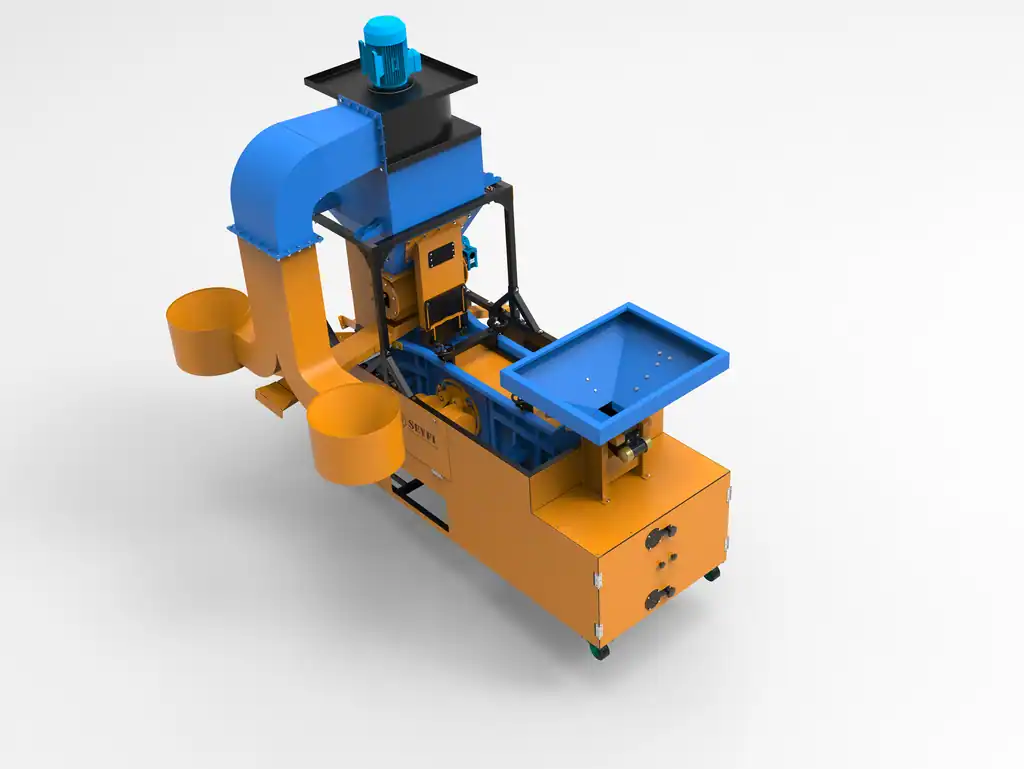
This category represents the new generation of machines, developed by Seifi Industrial Group, and is recognized as the best type of walnut shell separator for industrial lines. The combined mechanism of this machine includes controlled vibration for layering the material, aspiration (adjustable airflow) for suctioning light shells and waste, and multi-layer screening for separation based on size and density. The most important advantage of this model is its multi-stage and highly precise separation, which prevents additional kernel breakage and ejection. Because this machine also detects lightweight and hollow walnuts, it is also called a walnut hollow-kernel remover.
How the hard walnut shell separator from kernels works
To better understand the value of the machine, we need to know exactly what happens inside it. In the industrial model from Seifi Industrial Group, the process is approximately as follows:

Stage 1: Feeding and material entry
The output from the walnut cracker is transferred directly or via a conveyor and bucket elevator to the inlet of the separator machine. This inlet is designed to feed the material evenly and at a controlled flow rate into the separation section.
Stage 2: Spreading the material on the vibrating surface
The material is placed on one or more perforated surfaces (trays or screens). The vibration motor or mechanism begins to move. This vibration causes the kernels and shells to separate from each other, preventing different layers of material from remaining stacked, so the material moves in a smooth layer and becomes separable.
Stage 3: Separation based on density and weight (aspiration)
In this section, the walnut aspirator, which is either integrated into the same machine (in combined models), begins to operate. A controlled airflow passes through or across the material from below or the side. The lighter shells and dust are then removed by suction and directed to the waste collection tank. Finally, the heavier kernels remain on the surface and move toward the kernel outlet.
Stage 4: Final screening (primary sorting)
In advanced models, at the machine’s output, there is also a final screening stage to separately collect very small kernels and any remaining shell fragments. These outputs are typically transferred to the walnut sorting machine for final separation based on size and quality.
Stage 5: Final product output
Clean, shell-free kernels with minimal waste are transferred from the main outlet to the next stage of the line, such as sorting, packaging, or oil extraction. The shells and waste are also discharged in a controlled manner through side outlets.
Advantages of using the walnut shell separator
The advantages of using the walnut shell separator include:
- Increased kernel purity percentage: Significant reduction in the percentage of remaining shells in the product, and the ability to offer walnut kernels as a premium or top-grade product.
- Savings in labor costs: Eliminating the need for manual separation, which is very time-consuming and tedious, and reducing human errors in distinguishing kernels from shells.
- Increased production line speed: Synchronizing the machine’s speed with the cracker and sorter, achieving higher throughput per unit of time without compromising quality.
- Reduced waste and kernel breakage: Principled design and adjustment of impact and vibration, preventing excessive kernel fragmentation.
- Improved hygiene conditions: Collecting dust and shells in a designated path, preventing the spread of particles throughout the workshop or factory environment.
Technical specifications of the walnut shell separator
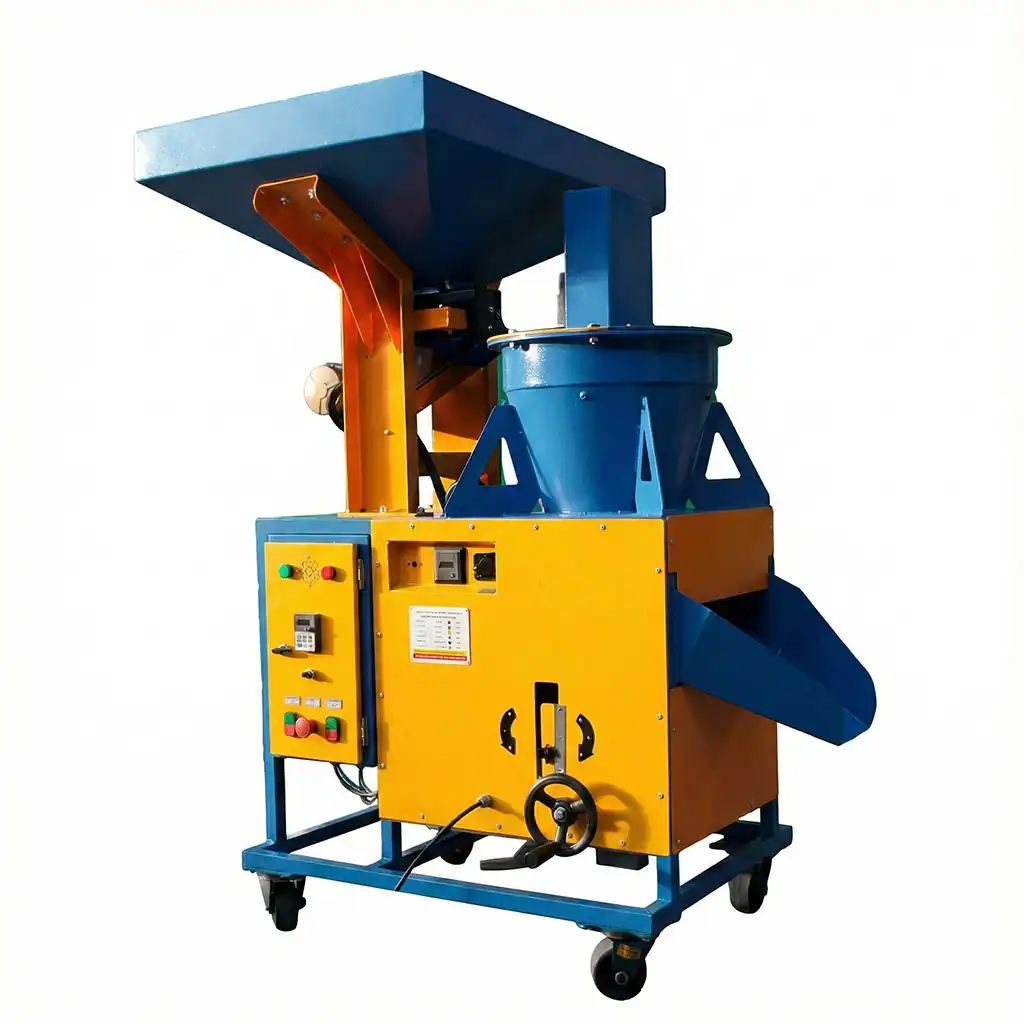
The walnut shell separator from Seifi Industrial Group is available in single-phase and three-phase models with capacities of 100 and 300 kg per hour. This machine is wheel-mounted and, with a height of 2.90 meters, has the capability to connect to a larger automatic feeding hopper, conveyor, bucket elevator, and other equipment in the processing line.
The aspirator feature has adjustable air flow and, with 4 outputs, enables the separation of dust, healthy kernels, broken pieces, and shell fragments.

Price of the walnut shell separator and factors affecting it
The final price of this machine depends on several important factors, including the following:
- Production capacity: The higher the machine’s capacity, the larger the dimensions, motor power, and structural strength, which in turn increases the price.
- Type of separation system: Machines equipped with only a vibration system are cheaper, while models featuring a combined vibration + aspiration + multi-stage screening system are more professional and expensive, but they will prove to be much more cost-effective in the long run.
- Body and component material: The use of high-quality stainless steel, superior bearings, and branded motors increases the price, but it results in lower wear, longer service life, and significantly fewer breakdowns.
- Level of automation: Basic models have only manual controls, while industrial versions feature electrical control panels, inverters, sensors, and smart adjustment capabilities.
- After-sales service and warranty: A machine offered with warranty and support may have a slightly higher initial price than unbranded alternatives, but in terms of repairs, parts supply, consultation, and line upgrades, it fully returns your investment.
Important points to consider when buying a walnut shell separator
To ensure your purchase is a long-term investment and not an unnecessary expense, be sure to evaluate the separation quality and kernel purity percentage. Ask the seller to run a test with your actual product and check the amount of remaining shells in the kernels.
Additionally, matching the machine’s capacity with the rest of the line is important. Ensure that the capacity of the separator is aligned with the walnut cracker and sorter. An unbalanced capacity will create a bottleneck in the line.
If the machine’s durability matters to you, check the material and thickness of the body sheet. A thin body means more vibration, shorter lifespan, and higher noise levels. Also, it is better for the parts that come into contact with the product to be made of food-grade stainless steel.
Most importantly, ensure the availability of genuine warranty and after-sales services, such as operator training, and do not settle for just a paper warranty. The brand’s track record and customer satisfaction levels are more important. In this regard, Seifi Industrial Group, due to its long history in the walnut production line sector, is one of the most reputable names.
Purchasing the walnut shell separator from Seifi Industrial Group
Seifi Industrial Group is one of the few companies that specializes in the complete walnut processing line. If your goal is to set up or upgrade a professional walnut processing production line, choosing the walnut shell separator from Seifi Industrial Group, alongside other equipment from this company such as the walnut sorting machine, is the most logical and cost-effective path. Seifi Group also provides consultation with experts, warranty coverage, and after-sales services.
Final Word
The walnut shell separator is no longer an optional item in the production line. In a competitive market, it has become a necessity. Without precise shell separation, your product will be of lower quality and customers will be more dissatisfied. On the other hand, with a professional machine, you will receive clean kernels ready for sorting and packaging, and your production line will operate in an integrated, smooth, and durable manner.
The industrial models from Seifi Industrial Group are designed based on the real needs of Iranian producers, combined with experience and technical expertise, and they can elevate the separation section of your production line.
Frequently Asked Questions
Can this machine be synchronized with my current walnut cracker?
In most cases, yes. By adjusting the height, conveyor, and input flow rate, Seifi machines can easily be synchronized with various walnut crackers.
Does the machine require a dedicated operator?
No, it only needs an operator for control, turning on/off, and general supervision; the separation process itself is automatic.
Is it also cost-effective for small-scale lines?
Yes, even at medium capacities, the reduction in labor costs and the increase in product quality will recover the machine’s cost in a relatively short period.